What is plantar fasciitis?
The plantar fascia is a soft tissue that covers the long arch of your foot, connecting the heel bone to the forefoot. When this tissue is placed under excessive load or lacks mobility, it can cause pain that is most typically felt at its origin on the medial aspect of the heel. This condition is well-known as plantar fasciitis (inflammation of the plantar fascia).
This pain usually appears gradually and worsens over time if left untreated. Most people experience discomfort when bearing weight, especially when taking their first steps in the morning or after sitting for a long period.
Common causes of plantar fasciitis
There are many reasons why someone may be prone to developing plantar fasciitis. Some common causes include:
- Tight calf muscles
- High or collapsed arches
- Weakness in the foot and/or hip musculature
- Hormonal changes, such as menopause
Effective treatments for plantar fasciitis
There are multiple treatment options to help relieve pain and promote healing.
Manual therapy performed by a physiotherapist, osteopath, or massage therapist can help release tension and improve tissue mobility.
Other useful modalities may include:
- Taping
- Ultrasound
- Shockwave therapy
- Night splints and/or personalized orthotics prescribed by a podiatrist
Commonly recommended physiotherapy exercises for plantar fasciitis
Here are a few key exercises that may be prescribed by your health professional to reduce pain and strengthen the foot and calf muscles:
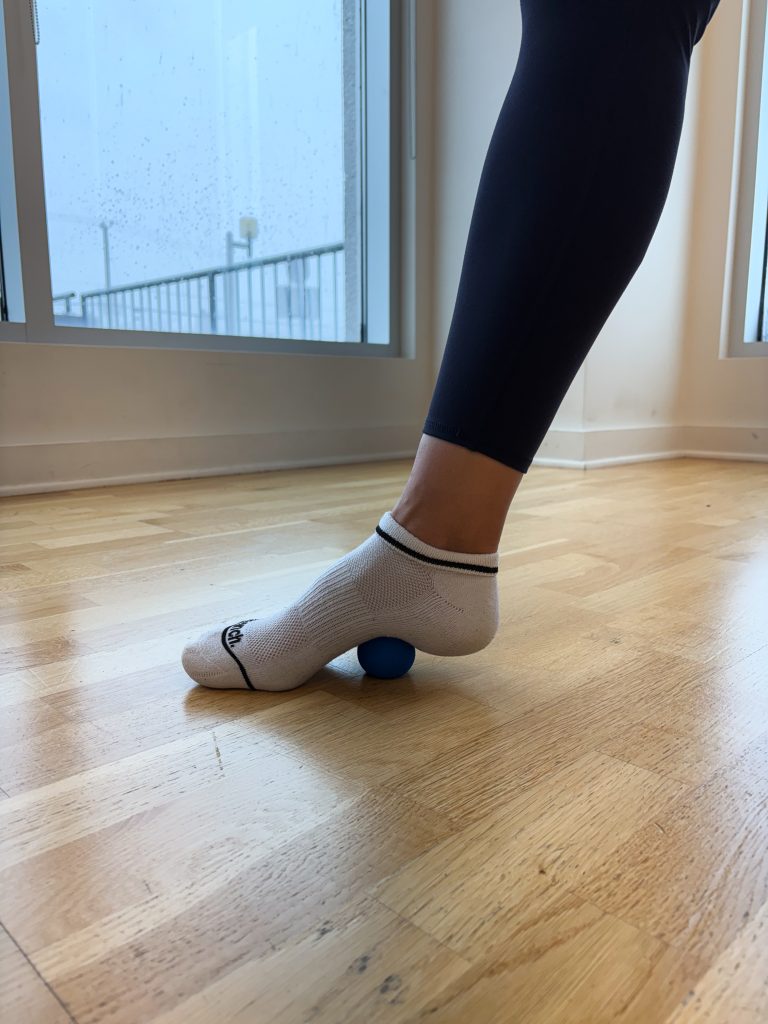
1. Rolling the plantar fascia
Using a small, firm ball (like a golf or lacrosse ball), apply pressure to the arch of your foot from heel to toes for 1–2 minutes. This can be done sitting or standing, but should create enough pressure to feel a slight discomfort, as in a deep-tissue massage.
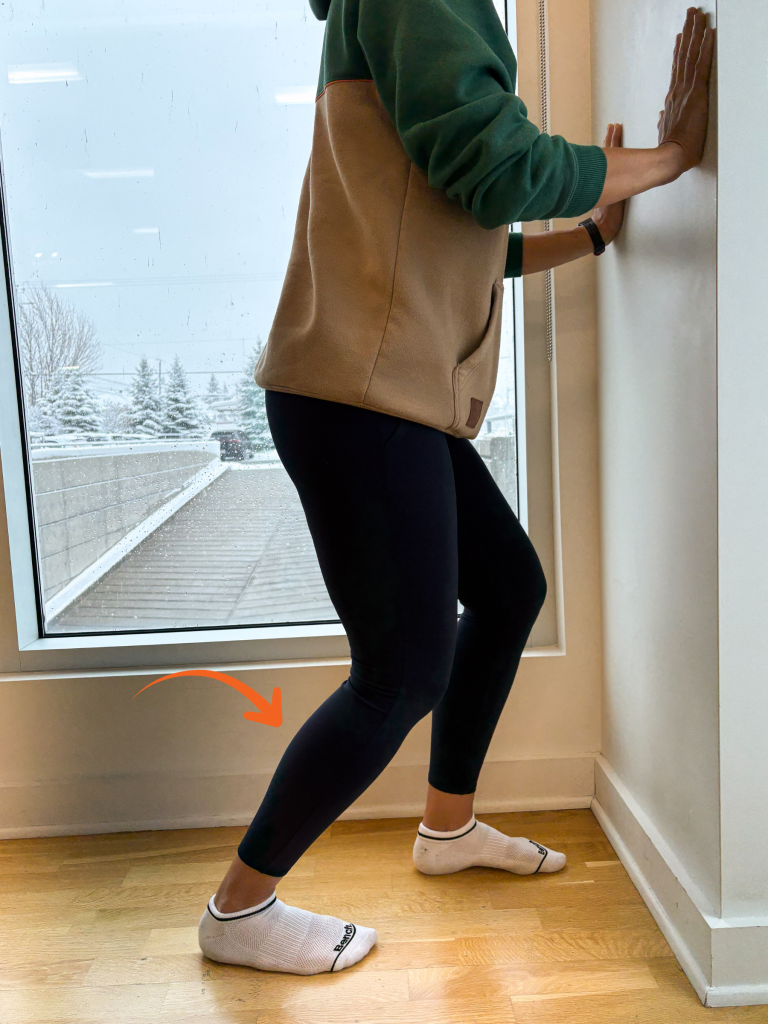
2. Soleus stretch
Stand, placing your hands against a wall in front of you. Move your affected leg behind while keeping your heel in contact with the ground. Then, bend your knee until you feel a stretch in your lower calf.
3. Eccentric calf raises on a step
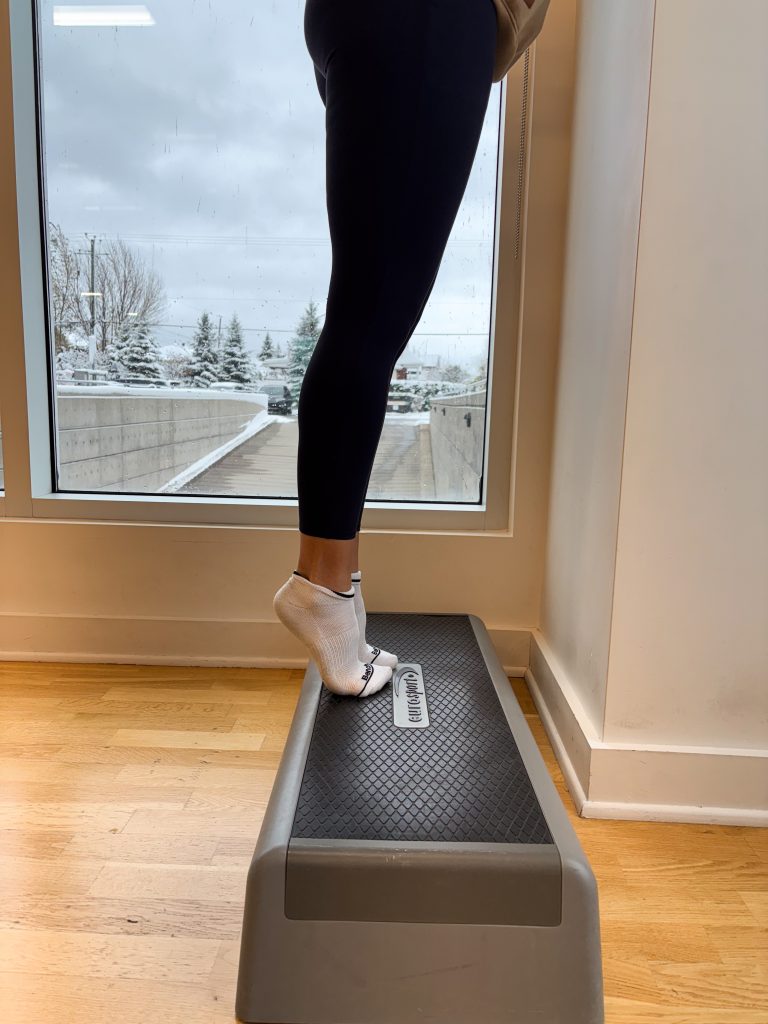
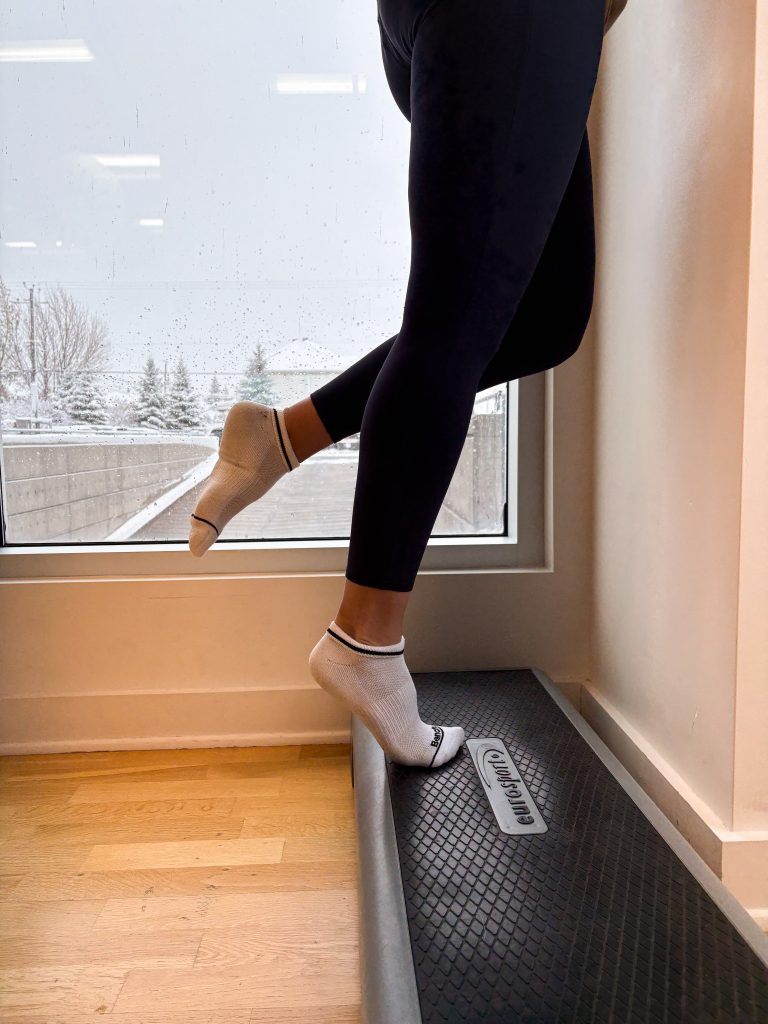
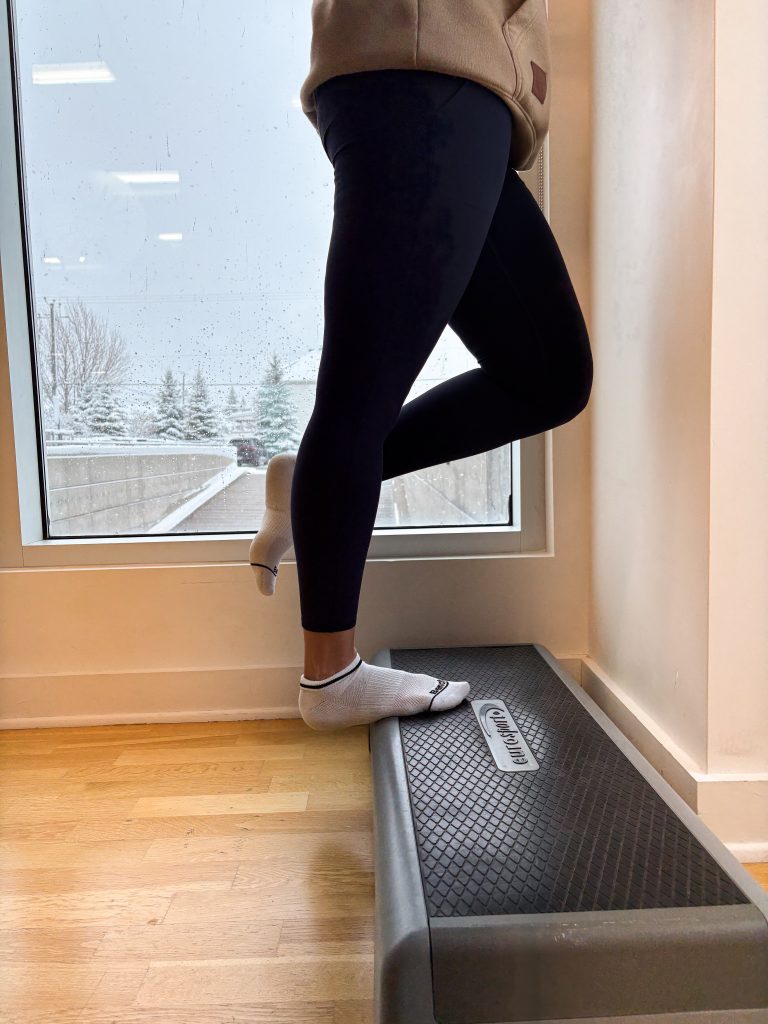
Stand at the edge of a stair or step while holding onto a wall or chair in front of you for support. Raise up onto your toes as high as possible. Lift the unaffected foot off the stair, then slowly lower yourself on the affected foot until your heel just passes the edge of the step. Place both feet down again and repeat for the recommended number of repetitions.
4. Resisted toe flexor strengthening
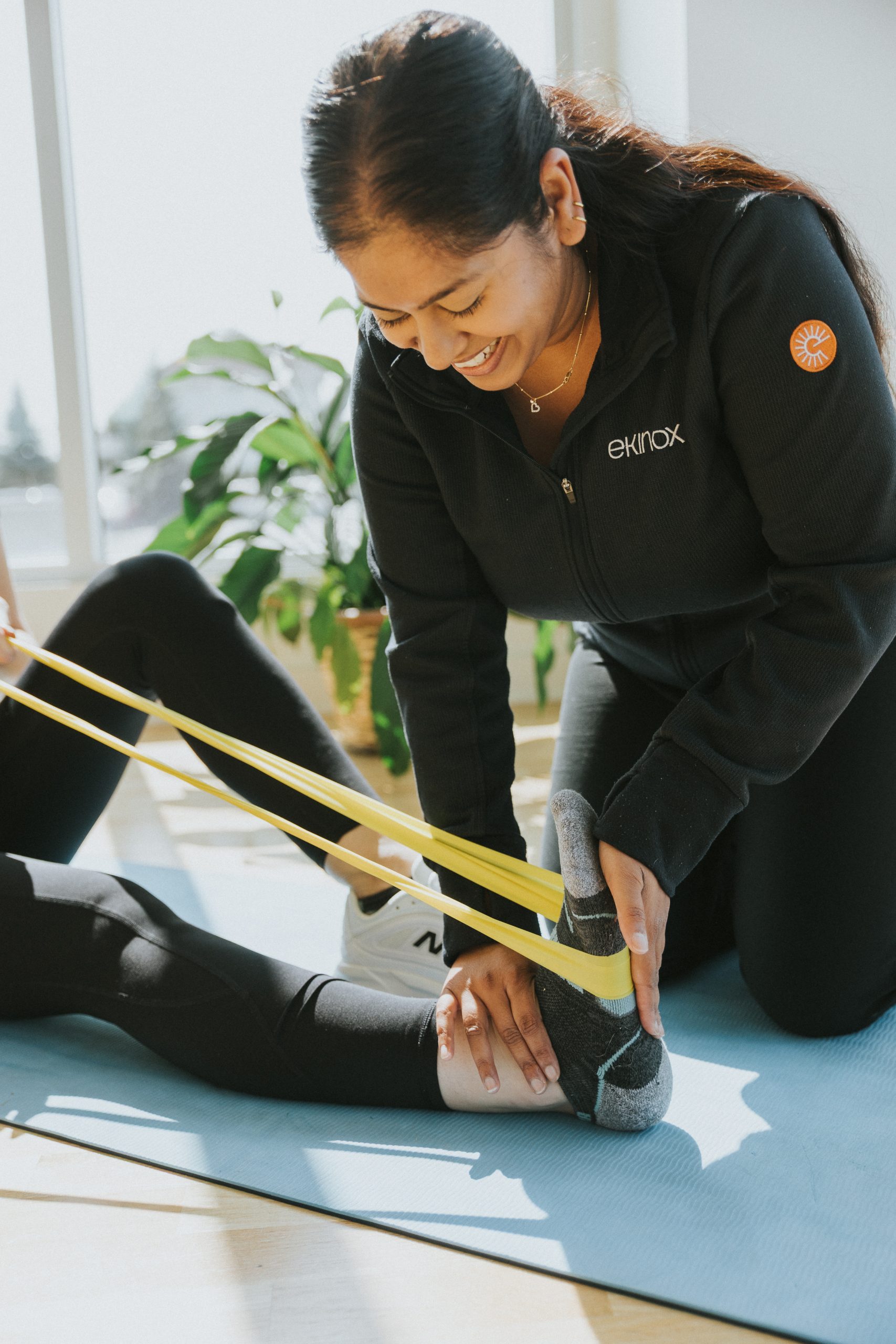
Anchor an elastic band under your foot and pull up on the other end with your hand to create resistance, enough to lift your toes into extension off the floor. Keeping your toes as long and spread out as possible, press your toes down into the resistance of the band. Relax, pull back on the band, and repeat.

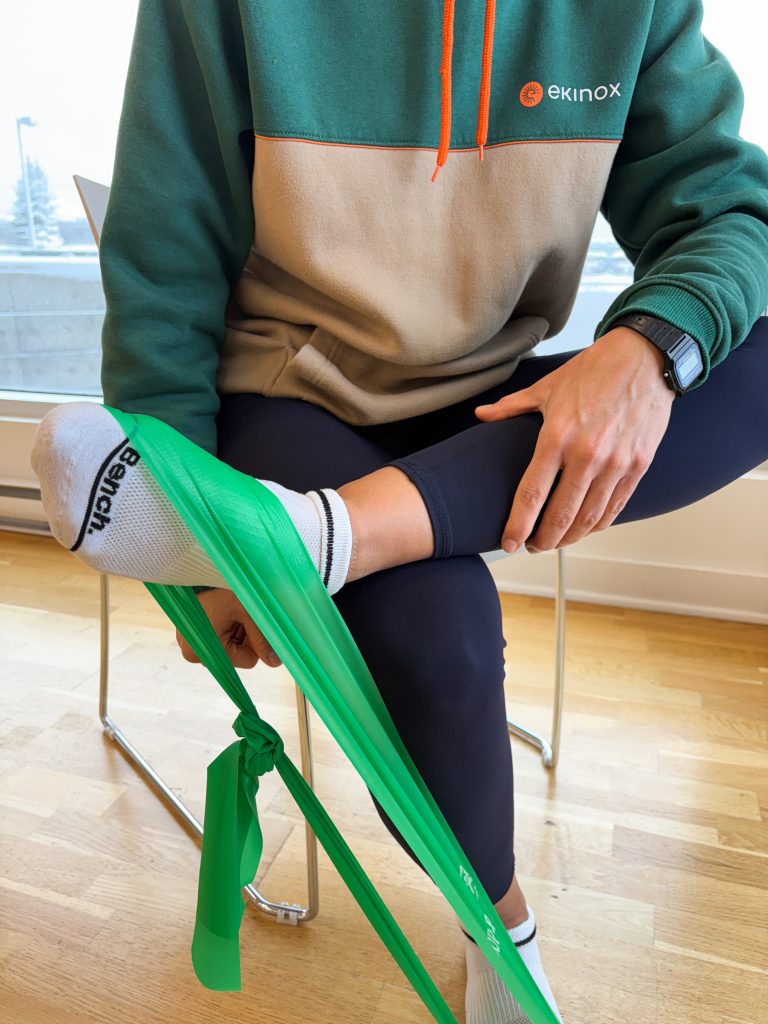
5. Posterior Tibialis strengthening with elastic
Sit on a chair with your affected foot crossed over the other knee. Place an elastic band around both of your feet. Pull your top foot into plantar flexion and inversion against the resistance of the band (as if turning the sole of your foot towards the sky). Use your hand for assistance as needed to reach end-range. Slowly control your foot and return to starting position. Repeat for the recommended number of repetitions.

When to consult a physiotherapist?
If you suspect you have plantar fasciitis or ongoing heel pain, come visit us at Ekinox to be properly assessed. Our professionals will guide you through personalized treatment plans and progressive exercises to support a safe and lasting recovery.