When people think of lymphatic drainage, they often associate it with heavy legs or post-surgical recovery. However, this gentle massage technique may be recommended in many other situations.
But how does it actually work? What are its real benefits? And is it appropriate for your condition? Let’s take a closer look.
What is the lymphatic system?
Like your circulatory system, your body has another essential network: the lymphatic system. Made up of lymphatic vessels, lymph nodes and organs, it transports lymph, a fluid that helps maintain fluid balance in the tissues and supports the normal function of the immune system.
When this system is not functioning as efficiently or when fluid accumulates, some people may experience swelling, a feeling of heaviness or discomfort. This is where lymphatic drainage may offer valuable support.
What is lymphatic drainage?
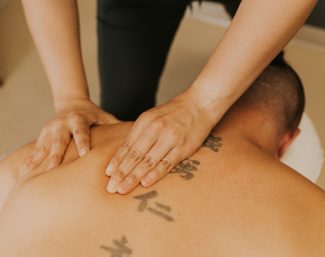
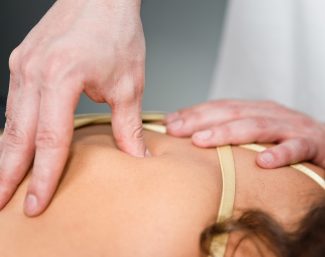
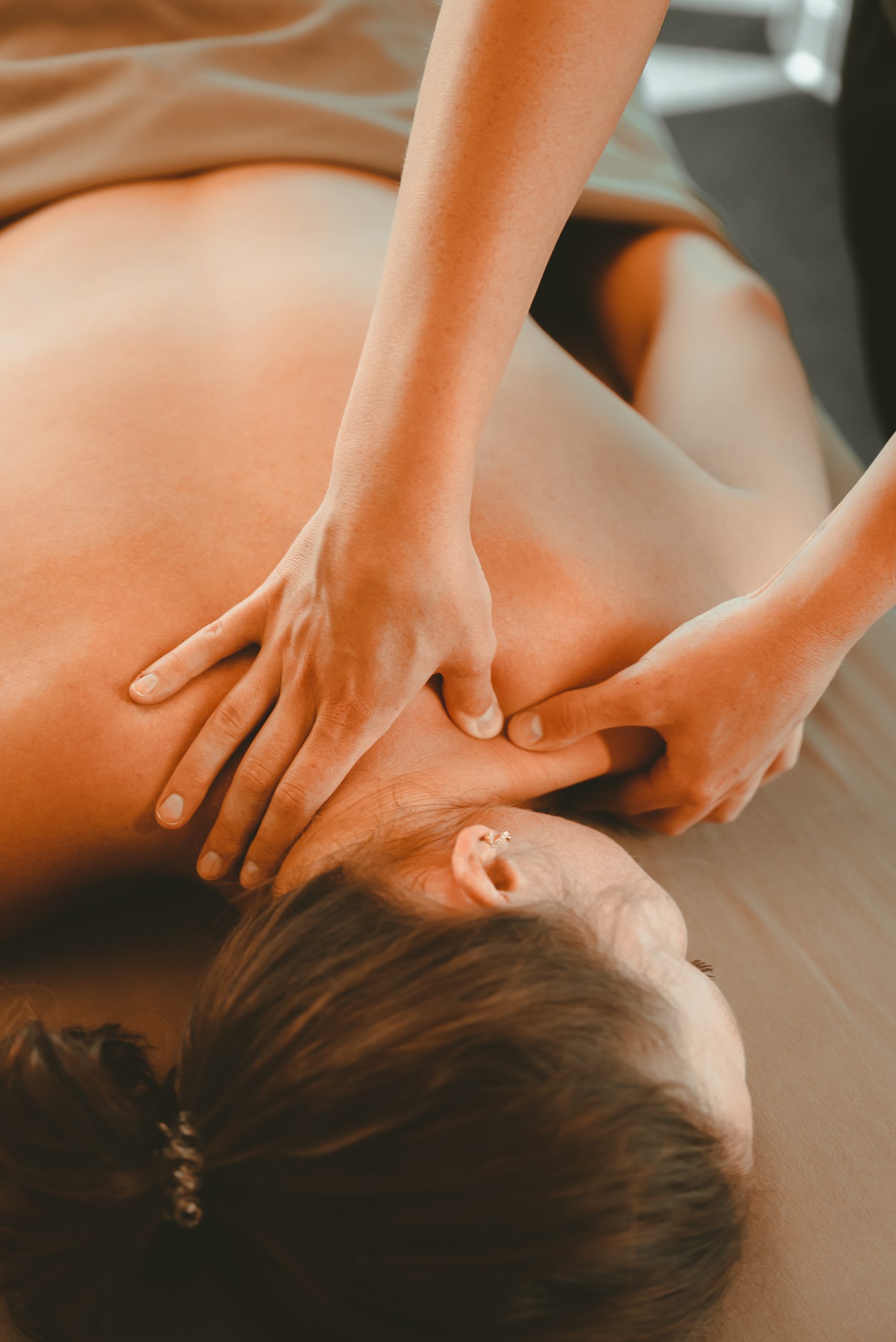
Manual lymphatic drainage (MLD) is a gentle massage technique designed to stimulate the circulation of lymph throughout the lymphatic system. The movements, often compared to the motion of a wave, consist of light pumping techniques over the lymph nodes and gentle drainage strokes performed in the direction of lymph flow.
Performed using the fingers and palms of the hands, lymphatic drainage differs from other types of massage through its very light pressure and slow, rhythmic movements.
A complete treatment generally lasts about 90 minutes. The number of sessions will vary depending on your condition and goals. Your therapist will work with you to develop a personalized treatment plan tailored to your needs.
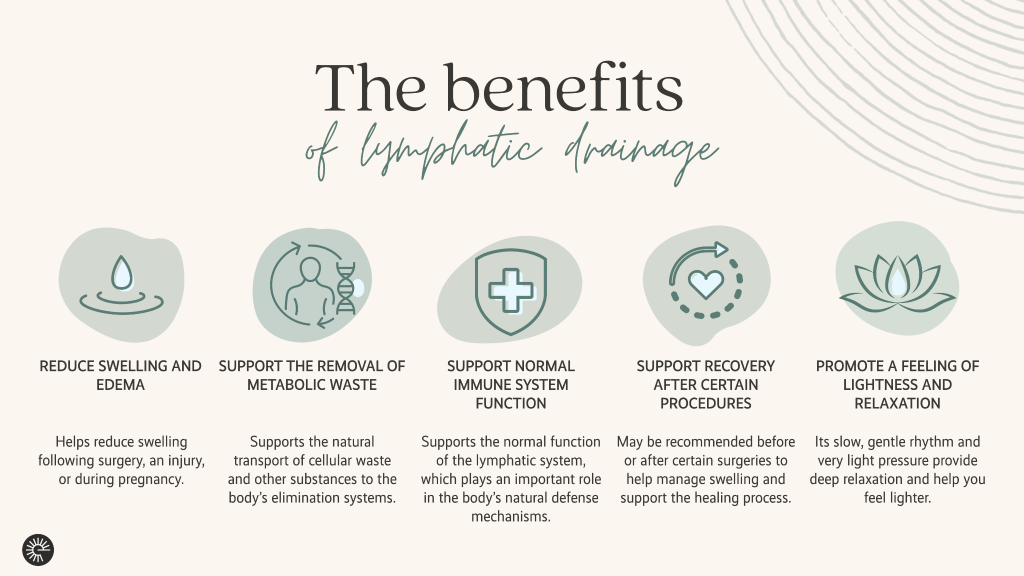
What are the benefits of lymphatic drainage?
In what situations can lymphatic drainage be beneficial?
Lymphatic drainage may be a good option if you are experiencing swelling, a feeling of heaviness, or if you are looking to support your recovery. It may be recommended in the following situations:
Before or after surgery
- Preparation
- Swelling management
- Recovery and healing
Heavy legs or edema
- Improved circulation
- Fluid retention
During pregnancy or postpartum
- Feeling of heaviness in the legs
- Breast engorgement (mastitis)
Lymphedema
- Supportive care
Certain chronic pain condition
- Such as fibromyalgia
To promote relaxation
- Overall well-being
Does lymphatic drainage “detox” the body?
It is often said that lymphatic drainage “detoxifies” the body. In reality, the answer is a little more nuanced.
Although it is often associated with “detox”, it does not replace the body’s natural elimination processes, which are primarily carried out by the liver and kidneys. Instead, its role is to support lymph circulation and fluid management within the tissues.
In other words, lymphatic drainage is not a detox treatment, but when appropriate, it may help support normal lymphatic function and contribute to your overall well-being.
Is lymphatic drainage right for everyone?
Although lymphatic drainage is a gentle technique, it is not appropriate for every situation. Certain conditions require a prior assessment or the advice of a healthcare professional.
For example, this technique may be contraindicated or require special precautions in the presence of:
- an acute infection (such as pneumonia or tuberculosis), a contagious illness, or a fever;
- certain uncontrolled heart conditions;
- thrombosis or active phlebitis;
- lymph node cancer (Hodgkin lymphoma);
- carotid sinus hypersensitivity;
- current antibiotic treatment;
- certain other medical conditions.
Before beginning treatment, your massage therapist will take the time to assess your condition to ensure that lymphatic drainage is safe and appropriate for your needs.
More than just a massage
Lymphatic drainage is much more than a massage that provides a feeling of lightness. When indicated, it can help manage certain types of swelling, support recovery and promote the normal function of the lymphatic system.
As with any therapeutic approach, the most important thing is that it is tailored to your condition and your goals.
At Ekinox, we take time to assess your situation and guide you toward the treatment that best meets your needs, because every person is unique, and your treatment plan should be too.
Sources :
- Académie de massage scientifique. (2024). Drainage lymphatique (méthode du Dr Leduc) [Notes de cours].
- Fédération québécoise des massothérapeutes agréés. Lymphatic drainage. 2026 https://www.fqm.qc.ca/en/massage-therapy/lymphatic-drainage/