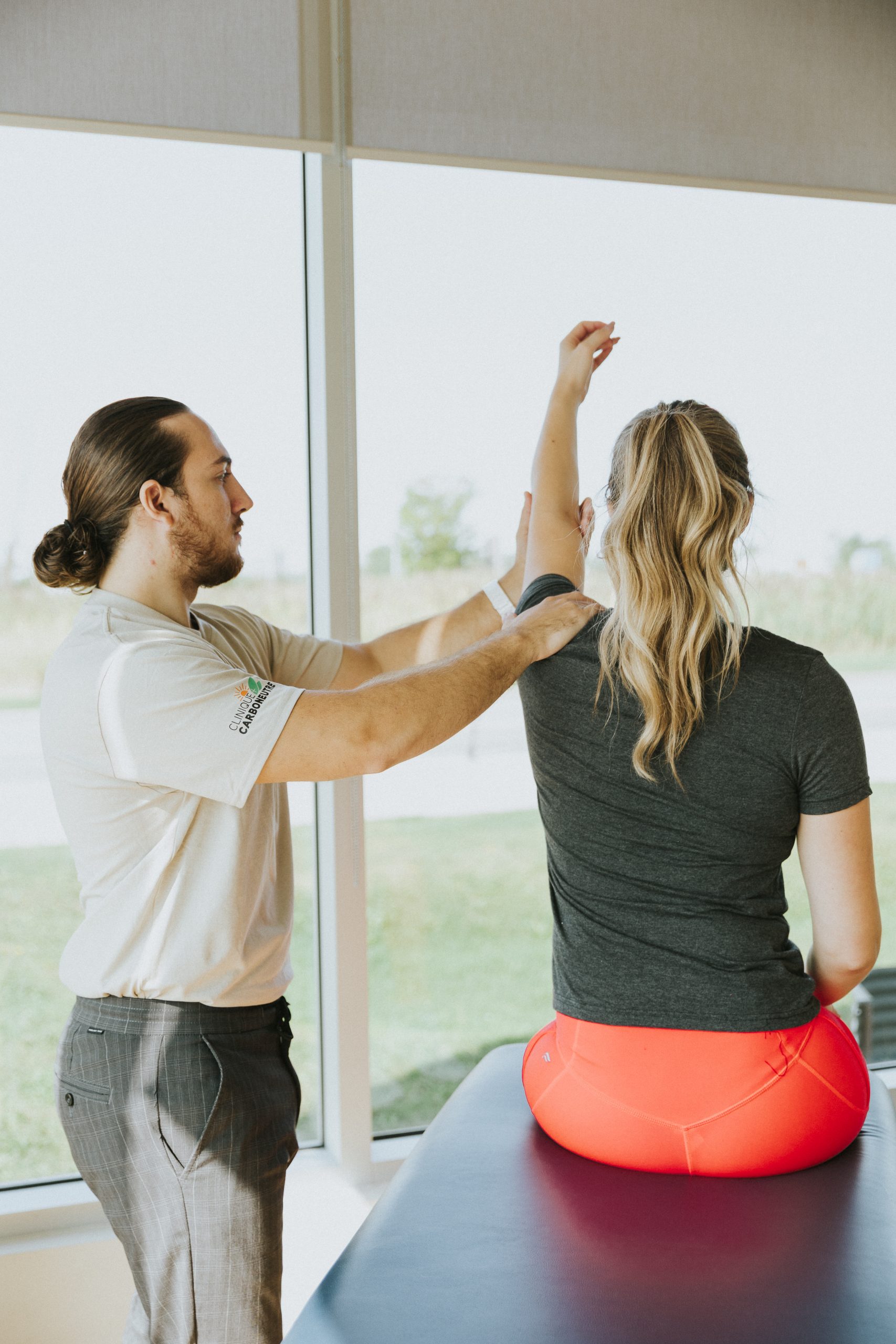
You’re feeling persistent tension between your shoulder blades or shoulder pain that keeps coming back, especially after long hours at the computer? These symptoms are extremely common and often linked to posture, muscle imbalance, or a lack of movement. The good news is that physiotherapy can help you identify the root cause and regain long-lasting comfort.
Why are these pains so common?
Shoulder and shoulder blade pain affects both sedentary people and active individuals. When you stay seated for long periods, your shoulders tend to round forward and your head to lean forward. This posture overworks certain muscles (like the upper traps and pectorals) while others in the upper back become weakened.
💡 Did you know that 17 muscles attach to your shoulder blades?
These muscles support shoulder stability and smooth movement. When they become tight or weak, they can disrupt the entire mechanics of the upper body. The result: pain that can radiate into the neck, arms, or back.
Stress also plays a significant role. When tense, we subconsciously contract the shoulders and neck, which increases stiffness and muscular fatigue.
The link between posture and shoulder pain
Your posture directly influences how your shoulders move. When the shoulder blade muscles no longer stabilize properly, shoulder movement becomes less fluid. Over time, this can lead to pain, inflammation, or even tendinopathy.
Fortunately, a few simple adjustments can make a big difference. For example, getting up every 45-60 minutes, stretching, and gently bringing the shoulders back are small but powerful habits to reduce muscle tension and prevent pain.
When should you see a physiotherapist?
Consider booking a physiotherapy assessment if you notice:
- shoulder or shoulder blade pain that persists for more than a few days;
- stiffness when moving your arm or neck;
- a feeling of heaviness or pain radiating into the upper back, neck, or arm;
- weakness or numbness.
During an evaluation, the physiotherapist examines not only the shoulder, but also the posture, neck, and shoulder blades, because all these structures work together. The goal is to identify the true source of the problem for effective treatment.
How does physiotherapy help relieve shoulder and shoulder blade pain?
Physiotherapy takes a global approach that targets both immediate relief and long-term prevention.
A treatment plan may include:
- manual therapy to relax tight muscles and improve joint mobility;
- personalized exercises to strengthen the shoulder blade stabilizing muscles;
- postural retraining to restore muscular balance;
- tailored recommendations for your workstation or physical activities.
🎯 Goal: improve strength, coordination, and posture to restore smooth, pain-free movement.
Simple habits to prevent pain day-to-day
A few daily habits can significantly reduce tension:
- Adjust your workstation: screen at eye level, shoulders relaxed, feet flat on the floor.
- Move often: stand up, walk or stretch lightly every hour.
- Add key exercises:
- scapular retraction (gently pulling the shoulders back)
- shoulder rolls backward
- pec stretch against a wall
Shoulder or shoulder blade pain isn’t inevitable. By understanding the role of your shoulder blade muscles and correcting certain postural habits, you can regain comfort and mobility.
Our physiotherapists are here to identify the cause of your pain, guide you through personalized exercises, and help you restore a strong, balanced posture, so you can move better every day.