One pain. Different experts.
You wake up one morning with a stiff neck. Or perhaps, your neck has been hurting for more than two weeks after long days spent working at a computer.
So, which healthcare professional should you see for neck pain?
Physiotherapist, massage therapist, osteopath, kinesiologist, occupational therapist, or acupuncturist: several professionals can help, but not necessarily in the same way.
The best choice depends on the likely cause of your pain, your symptoms, your goals and how the problem affects your activities. For example, physiotherapy may be appropriate for assessing and treating a musculoskeletal issue, while massage therapy may be sought primarily for muscle tension. Kinesiology focuses more on movement and physical capacity, while occupational therapy looks specifically at how pain affects your daily activities.
Let’s look at how each of these approaches could help with the same neck pain.
Neck pain: which approach should you choose?
Imagine that you seek treatment for neck pain that has been present for two weeks.
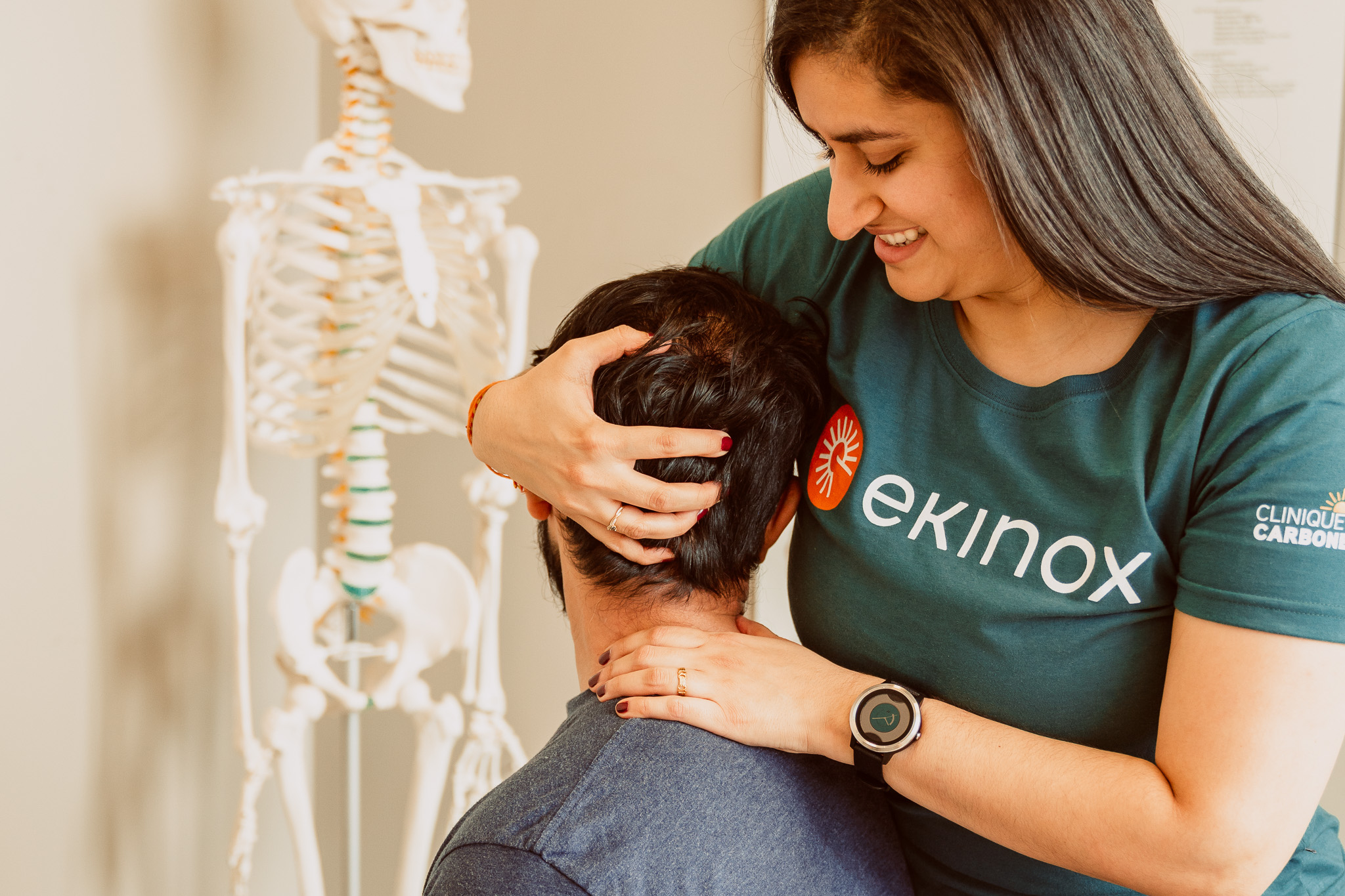
Physiotherapy: to assess your pain and restore function
A physiotherapist will first try to understand what may be contributing to your neck pain. The assessment may look at your mobility, strength, movement habits and the structures that appear to be involved.
The goal is to reduce pain, restore function and help you return to your activities. Depending on your situation, treatment may include exercises, manual therapy, education and other modalities.
Physiotherapy may be particularly relevant if your pain limits your movement, persists, started after an injury or is accompanied by other musculoskeletal symptoms. Passive treatments will also be combined with exercises to address the problem!
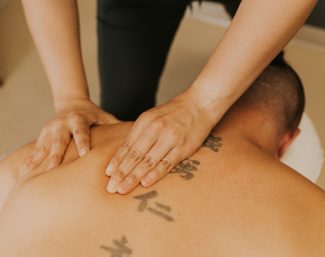
Massage therapy: for muscle tension and comfort
A massage therapist will work primarily on the muscles and soft tissues.
Depending on your condition, treatment may help reduce certain areas of tension, promote muscle relaxation, improve comfort and provide an overall sense of well-being.
Massage therapy may be an option when muscle tension plays a significant role in your discomfort, particularly as a complement to another approach or when relaxation is what you need.
Kinesiology: to move, strengthen and prevent
A kinesiologist will focus more on how you move and your physical capacity. Lack of strength? Difficulty tolerating certain positions? Strain related to your activities?
Through a personalized exercise program, a kinesiologist can help you develop the strength, endurance and capacity needed for your activities. The approach looks at overall fitness and strengthening the entire body, rather than focusing solely on the neck. The goal is to help you participate in your sports and activities without your neck getting in the way.
Kinesiology can be particularly beneficial when your goal is to return to physical activity, improve your physical capacity or reduce factors that may contribute to the problem returning.
Osteopathy: for a global manual approach
An osteopath takes a whole-body approach. Rather than focusing solely on your neck, they may assess the mobility of different areas of your body to identify restrictions that could be associated with your symptoms. This whole-body approach also considers the interactions between different body systems, beyond the neuromusculoskeletal system.
Osteopathy may appeal to people looking for a manual approach that considers overall body balance and well-being. It can also complement exercises prescribed by a physiotherapist. If your neck pain occurs alongside other, more general discomforts, osteopathy may help explore potential connections between them.
Occupational therapy: when pain affects your daily life or work
An occupational therapist is interested not only in your pain, but also in what it prevents you from doing. Does your neck pain make long days at the computer difficult? Do you have trouble driving, sleeping, completing certain tasks at work or participating in your usual activities?
The goal is to understand how your pain affects your daily life and find practical solutions to help you resume your activities more comfortably. This may include ergonomic recommendations, changes to your environment, strategies to better manage your symptoms or exercises adapted to your situation.
Occupational therapy may therefore be particularly relevant when neck pain significantly affects your work or daily activities.
Acupuncture: to help manage pain
An acupuncturist uses different techniques that may help modulate pain, relax muscles, promote nervous system relaxation and support your recovery.
Depending on your situation, this approach may be used on its own or alongside other treatments.
Physio, massage therapy, osteopathy…How do you know which one to choose?
There is no single healthcare professional who is right for every type of neck pain. Each professional may approach the same problem from a different perspective.
The choice depends mainly on what you need right now. The same person may have needs that could benefit from more than one approach.
Most importantly, these professionals often share the same goal: helping you get back to what matters to you.
Can you combine different approaches for neck pain?
Yes. Different healthcare professions can complement one another rather than compete with each other.
For example, someone might see a physiotherapist to assess their condition and begin rehabilitation, receive massage therapy for muscle tension, and then incorporate an exercise program with a kinesiologist.
Someone else may benefit from occupational therapy if their pain makes working at a computer difficult.
The most appropriate approach will always depend on your condition, your goals and your individual situation.
When should you seek care for neck pain?
Occasional neck pain may sometimes improve on its own. However, seeking professional care may be appropriate when the pain:
- persists or gets worse;
- keeps coming back;
- limits your neck movement;
- interferes with your work, sleep or activities;
- started after an injury;
- is accompanied by other symptoms that concern you.
Frequently asked questions about neck pain
Physiotherapy or massage therapy for neck pain?
Both approaches can be beneficial, but their goals differ. If your pain is accompanied by limited movement, pinching or a feeling of being “stuck,” physiotherapy may be particularly appropriate. It can assess your mobility, function and the factors contributing to the problem. If you are mainly experiencing muscle tension after an activity, such as raking leaves in the fall, massage therapy may help relieve tension and improve your comfort.
Can an osteopath help with neck pain?
Osteopathy may be used for certain types of neck discomfort. Osteopaths primarily use manual techniques and consider the mobility of different areas of the body that may be associated with your symptoms.
Which healthcare professional should I see for a stiff neck?
The choice depends on factors such as the cause, intensity and duration of your symptoms. A physiotherapist can assess a musculoskeletal problem and develop an appropriate treatment plan. Other approaches, including massage therapy or osteopathy, may also be considered depending on your situation.
Who should I see for neck pain caused by computer work?
Several professionals may be able to help. Physiotherapy can help assess and treat the musculoskeletal problem, while occupational therapy may be particularly relevant when workstation setup or job demands contribute to your difficulties. Kinesiology can also help improve the physical capacity needed to better tolerate certain tasks or positions.
At Ekinox, we work together
At Ekinox, we believe there is no single right approach for every type of neck pain.
When appropriate, our professionals work together to guide you toward the service or combination of services best suited to your situation.
Because ultimately, the real question may not be:
‘Which healthcare professional is best?”
But rather:
“Which approach best meets my needs right now?”
Still not sure which healthcare professional to see for your neck pain? Our team can help guide you toward the service that best fits your situation.