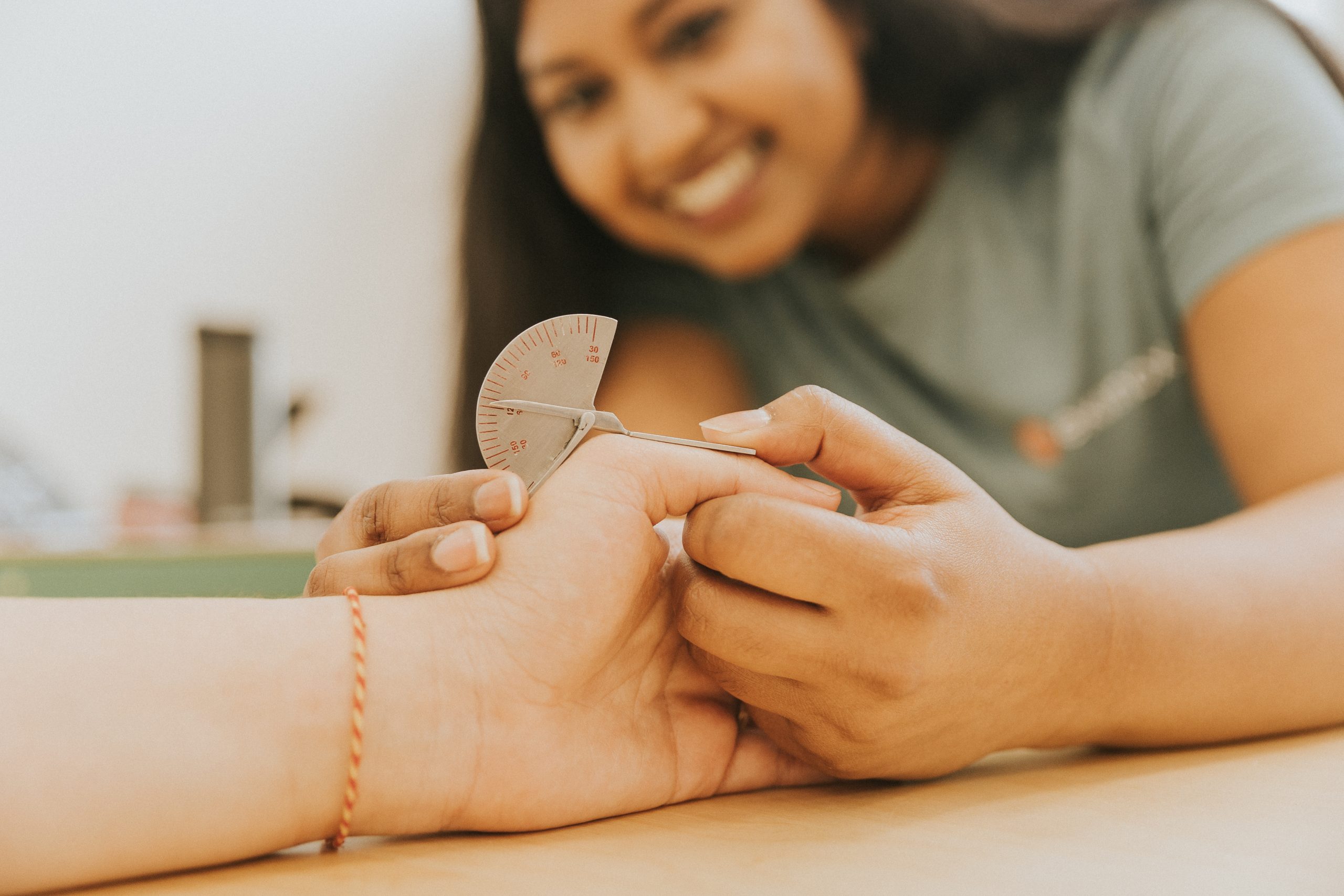
Your hands work hard and are at the heart of your daily life
Hand or wrist pain can quickly make simple tasks more difficult, such as working at a computer, opening a jar, cooking, driving or playing sports.
But when pain appears, a common question comes up: Should I wait for it to go away or seek care? And more importantly, who should I see?
Occupational therapy can play an important role in assessing and rehabilitating various conditions affecting the hand and wrist. Here are some situations where it may help.
Why can you have hand or wrist pain?
The hand is one of the most complex structures in the human body. It contains 27 bones, along with numerous muscles, tendons, ligaments, joints and nerves that work together to produce both precise and powerful movements.
When these structures are exposed to repetitive movements, significant effort or prolonged positions, they may be placed under greater strain. Depending on the situation, this can contribute to the development of certain musculoskeletal disorders, particularly when combined with insufficient recovery time or repeated overuse.
Some common causes or conditions
- Tendon injuries (tendinopathies)
- Nerve irritation or compression, such as carpal tunnel syndrome
- De Quervain’s tenosynovitis
- Osteoarthritis
- Sprains and fractures
- Pain related to repetitive movements
- Recovery following hand or wrist surgery
Wrist or finger pain is therefore not necessarily caused by the same problem from one person to another. An assessment can help identify the likely cause and how it is affecting your function.
When should you see a professional for hand or wrist pain?
Seeking an assessment may be appropriate when:
- the pain persists or gets worse;
- certain movements become difficult;
- you lose strength or start dropping objects;
- you experience numbness or tingling;
- your pain wakes you up at night;
- your daily, work or sports activities become more difficult;
- you are recovering from a fracture, surgery or another injury.
Should you wait before seeking care?
No. You don’t have to wait until the pain becomes severe or prevents you from doing certain activities. An early assessment can help you better understand your symptoms, make timely adjustments to certain activities and determine appropriate interventions. Addressing the problem earlier may also help prevent certain difficulties from becoming more established or having a greater impact on your daily life.
How can occupational therapy help with hand or wrist pain?
An occupational therapist assesses your condition, but also how your pain affects your work, leisure activities and daily life. Depending on your needs, several interventions may be recommended.
Assessing hand function
An occupational therapist can assess your mobility, strength, sensation and pain. They also look at the movements and activities that have become more difficult.
Adapting certain activities
Certain movements, repetitive tasks or positions can increase your symptoms. An occupational therapist can recommend adaptations for work, daily tasks, leisure activities or sports.
Regaining strength and mobility
Adapted exercises can help you gradually regain the mobility and strength you need for your activities. Your exercise program and its progression are based on your condition and goals.
Protecting or supporting the hand with an orthosis
Depending on your condition, an orthosis can help support or protect the hand and wrist. An occupational therapist can recommend a splint or, when appropriate, a custom orthosis (made by a third party).
Occupational therapy or physiotherapy for hand pain?
Both professionals can work with certain hand or wrist conditions. The occupational therapist focuses particularly on daily, work and leisure activities. They can also incorporate adaptations and orthoses when appropriate.
A physiotherapist can also help address pain, mobility, strength and return to activities.
Depending on your condition and needs, an interdisciplinary approach may be beneficial.
Taking care of your hands means taking care of your daily life
Our hands allow us to work, cook, create, enjoy our hobbies and care for the people around us.
When our hands become painful, it can affect much more than just our hands. It can affect our entire daily life.
At Ekinox, our occupational therapists take the time to understand your day-to-day reality and provide solutions tailored to your needs and goals. The goal is to help you regain better hand function and return to your daily, work, and/or leisure activities, while working to reduce your symptoms whenever possible.
Frequently asked questions about hand and wrist pain
Can an occupational therapist treat carpal tunnel syndrome?
Yes. An occupational therapist can work with people who have carpal tunnel syndrome. Depending on the situation, they may recommend activity modifications, exercises or an orthosis to reduce stress on the wrist and support hand function.
Is it normal to have numbness in your fingers?
No, numbness is not considered normal, but it is not necessarily a sign of a serious problem. Numbness can occur for different reasons. For example, you may wake up with a numb hand after sleeping on it. However, if numbness occurs during an activity, persists throughout the day, happens frequently or is accompanied by other symptoms such as loss of strength, it is best to consult a healthcare professional to determine the cause.
Do I need a referral to see an occupational therapist?
No. In most cases, you do not need a medical referral to see an occupational therapist. However, some insurance companies may require one in order to reimburse the cost of treatment. It is therefore best to check the requirements of your insurance plan.
References:
- Institut de recherche Robert-Sauvé en santé et en sécurité du travail (IRSST). Prevention of Musculoskeletal Disorders. https://www.irsst.qc.ca
- Ordre des ergothérapeutes du Québec (OEQ). The role of the Occupational Therapist. https://www.oeq.org