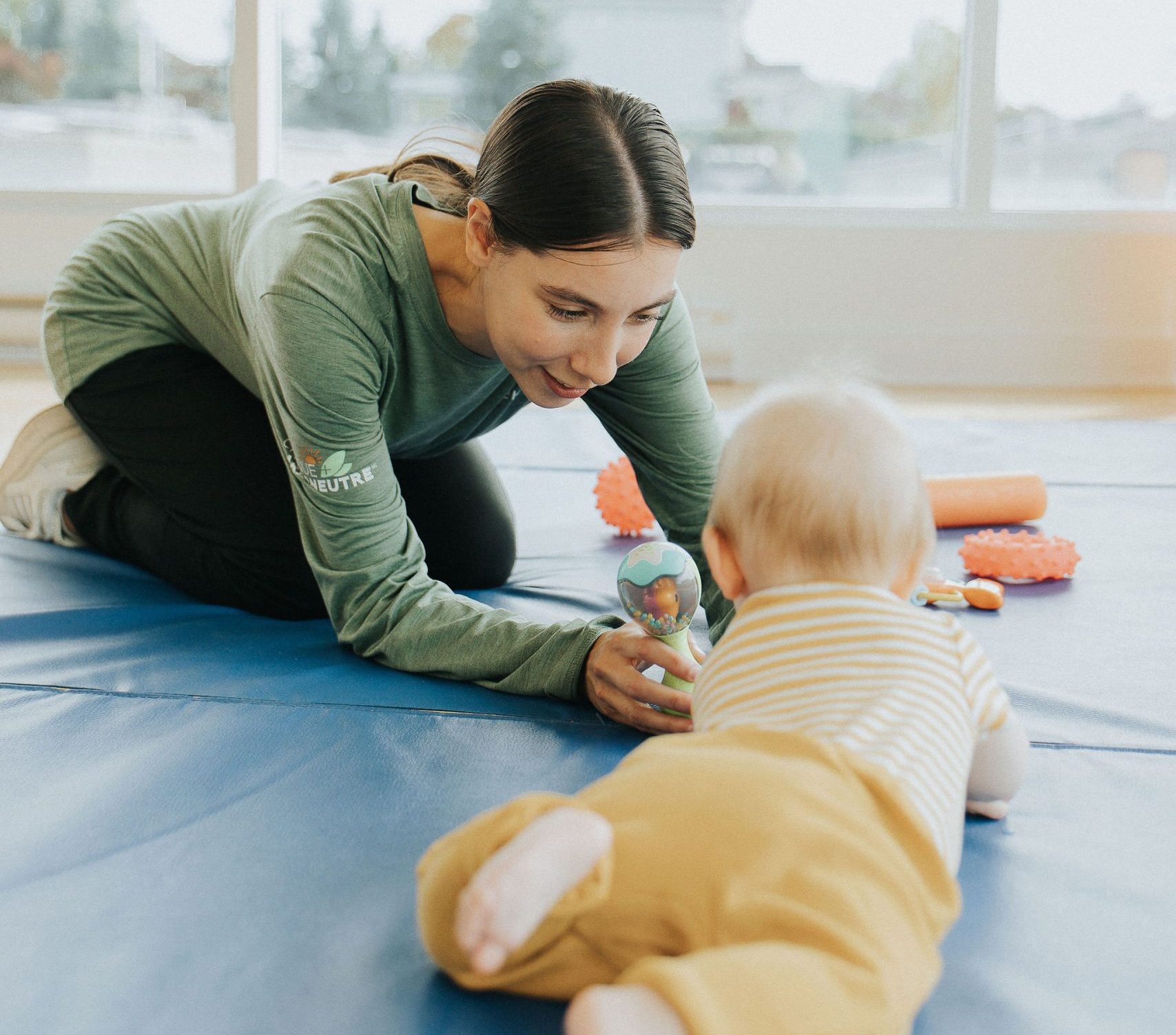
We often hear about the importance of giving babies time on their stomachs. But why exactly is tummy time so important for their development?
Tummy time plays an important role in helping babies develop the strength and motor skills they need to reach important developmental milestones. Let’s take a closer look at why it matters and how you can incorporate it into your baby’s daily routine.
Why do babies need tummy time?
Spending time on their tummy allows babies to develop strength in their postural muscles. These are the muscles we use to lift and support our head, back, shoulders and legs.
Building this strength is crucial for helping babies reach important developmental milestones, such as rolling and crawling. These movements help develop the skills needed to eventually sit independently, stand, walk and run!
Spending time on their stomach instead of always being on their back can also help reduce the risk of brachycephaly (flattening of the back of the head).
How often should you practise tummy time?
It is recommended to encourage tummy time at least once during each waking period, for as long as your baby is able to tolerate it.
If your baby starts to cry or shows signs of discomfort, don’t force it! It is better to do several short sessions and stop when your baby shows signs of stress.
The goal is to gradually help your baby become more comfortable spending time on their stomach.
What counts as tummy time?
There are many different ways to incorporate tummy time into your baby’s daily routine!
If your baby doesn’t enjoy spending a lot of time lying flat on their stomach, you can try different positions to make the experience more comfortable.
For example, you can place your baby:
- On your chest: You can lie down or recline comfortably and place your baby on your chest.
- On a large exercise ball: this allows you to adjust the angle of your baby’s body and make tummy time more gradual.
- On an inclined surface: Using a wedge pillow can help create a more gradual position for babies who have difficulty tolerating tummy time on a flat surface.
Finding different ways to incorporate tummy time into your daily routine can help make the experience more enjoyable for both you and your baby. Remember that tummy time should always be supervised and take place while your baby is awake.
Every baby develops at their own pace, and tummy time is an important part of supporting healthy motor development. If you have concerns about your baby’s development or need guidance on age-appropriate activities, a pediatric physiotherapist can help support your baby’s progress.
Frequently asked questions about tummy time
When should I start tummy time with my baby?
Tummy time can be introduced from the first days after birth, as long as your baby is awake and supervised. Start with short sessions and gradually increase the time as your baby becomes more comfortable.
What if my baby doesn’t like tummy time?
Some babies need time to get used to being on their stomach. Try different positions, such as placing your baby on your chest, on an exercise ball or on an inclined surface. Shorter sessions can also help make tummy time more enjoyable.
How long should tummy time sessions last?
There is no need to start with long sessions. Let your baby’s tolerance guide you and gradually increase the duration as they become stronger and more comfortable. Several short sessions throughout the day are a great way to practice.
Does tummy time help prevent flat head syndrome?
Yes! Spending time on their stomach while awake helps reduce prolonged pressure on the back of the head. This can help prevent positional brachycephaly, commonly known as flat head syndrome.
References: Hewitt L, Kerr E, Stanley RM, Okely AD. Tummy Time and Infant Health Outcomes: A Systematic Review. Pediatrics. 2020 Jun;145(6):e20192168. doi: 10.1542/peds.2019-2168. Epub 2020 May 5. PMID: 32371428.